Quick answer
Passau is the traditional starting point of the Danube Cycle Path (EuroVelo 6) toward Vienna, Bratislava, and Budapest. The city sits at the confluence of the Danube, Inn, and Ilz rivers — a dramatic setting that makes it one of Germany's most scenic cycling hubs. From Passau, Vienna is approximately 340 km downstream, typically completed in 5–8 days.
Who is this for
This guide is for cyclists starting the Danube Cycle Path in Passau, as well as travelers arriving in Passau by train and wanting to explore the city before or after a multi-day cycling tour.
Why Passau?
Passau has been the traditional start of the Danube Cycle Path for decades, and for good reason:
- Three rivers in one place — the confluence of the Danube (blue), Inn (green), and Ilz (dark) is visible from above at Oberhaus Castle and is one of Germany's most striking natural spectacles
- Excellent rail connections — Passau Hauptbahnhof is on the main Munich–Vienna line, making it easy to reach by train with a bike
- A beautiful old town — the Italian-influenced baroque city center, built on a narrow peninsula, is one of Bavaria's most photogenic
- Cycling infrastructure — the Danube Cycle Path begins right in the city, clearly signed and easy to follow from day one
The Danube Cycle Path from Passau
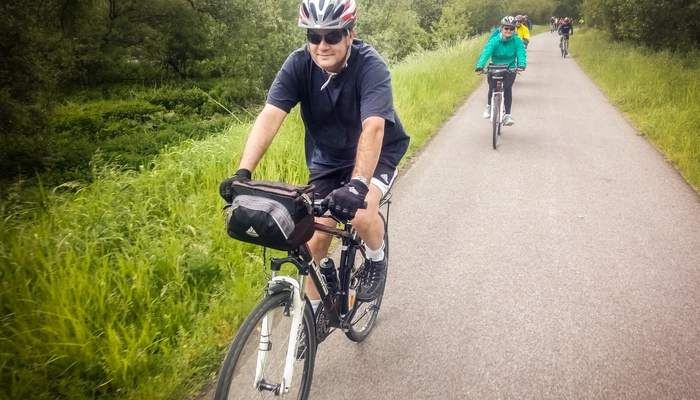
The route from Passau to Vienna follows the Danube almost exclusively on dedicated cycling paths, mostly on the riverbank or through river-meadow landscapes. The terrain is flat to gently rolling — the Danube flows downhill, so you're always moving with the current.
| Stage | From | To | Distance |
|---|---|---|---|
| Day 1 | Passau | Schlögen or Aschach | 55–70 km |
| Day 2 | Aschach | Linz | 40–50 km |
| Day 3 | Linz | Grein or Ybbs | 60–70 km |
| Day 4 | Ybbs | Melk or Krems | 60–75 km |
| Day 5 | Krems | Vienna | 75–90 km |
This is a relaxed pace. Faster cyclists can cover the route in 4 days; leisurely cyclists may prefer 7–8 days with shorter stages.
What to see in Passau
- Veste Oberhaus — the massive fortress overlooking the city from above the confluence. Bike up for panoramic views, or take the shuttle bus from the old town. The view of the three rivers is unmissable
- St. Stephen's Cathedral — home to one of the largest church organs in the world (17,974 pipes). Free organ concerts take place most days at noon in summer
- The old town peninsula — walk the narrow streets of the Altstadt, lined with baroque buildings, gelato shops, and riverside terraces. The Passau waterline markings on buildings show how high historic floods reached — some alarmingly high
- Inn and Ilz confluences — look downstream from Schanzlbrücke to see the distinct color boundaries where the three rivers merge but haven't yet mixed
- The Glass Museum (Glasmuseum) — an unexpectedly excellent museum of Bohemian and Bavarian glass art, housed in a grand hotel building
Getting to Passau
Passau is easy to reach by train:
- From Munich: ~1h 45min by direct train (Meridian/Länderbahn services)
- From Vienna: ~2h 30min by direct train (ÖBB Railjet)
- From Prague: ~3h by train via Plzeň or via Munich
Bikes can be taken on most regional trains with a bike reservation. On the Railjet and faster services, you'll need a bike ticket — book in advance, especially in summer.
Cycling within Passau
The city itself is compact and very walkable, but the terrain is hilly — the old town sits on a narrow peninsula, and the fortress above requires a significant climb. Most cyclists base themselves in the flat areas around the train station or on the outskirts and walk or cycle the flat riverside sections into the city center.
There are no major bike rental shops in the city center, but several tour operators (including us) can arrange bike delivery to your Passau hotel.
When to go
The Danube Cycle Path from Passau is at its best from late April to early October. May and June are ideal — the river is running high but paths are clear, wildflowers are in bloom, and temperatures are comfortable for cycling. July and August are the busiest months (more cyclists on the path, more tourists in towns). September offers golden light, apple and pear trees heavy with fruit along the path, and a quieter experience overall.
Avoid March and early April — the river can flood sections of the path, and some guesthouses along the route are not yet open for the season.
Practical tips
- Start early on day 1 — the section just south of Passau through the Schlögener Schlinge gorge is the most spectacular and deserves unhurried time
- The bike path is not always on the same bank — ferries cross the Danube at several points, usually €2–4 per person including bike
- Book accommodation well in advance for July–August, especially in popular stops like Grein, Melk, and Dürnstein
- Carry a detailed paper map as backup — the official Esterbauer cycling map for the Danube Cycle Path is the gold standard
- The path can be muddy after heavy rain — wider tires (32mm+) are more comfortable than narrow road bike tires
- Passau has good supermarkets near the train station for last-minute supplies before departure
Recommended tours
We offer a fully supported Passau to Vienna self-guided cycling tour along the Danube Cycle Path. Your bike, luggage transfer, and accommodation at charming guesthouses along the route are all arranged in advance — all you need to do is pedal and enjoy the scenery.