Quick answer
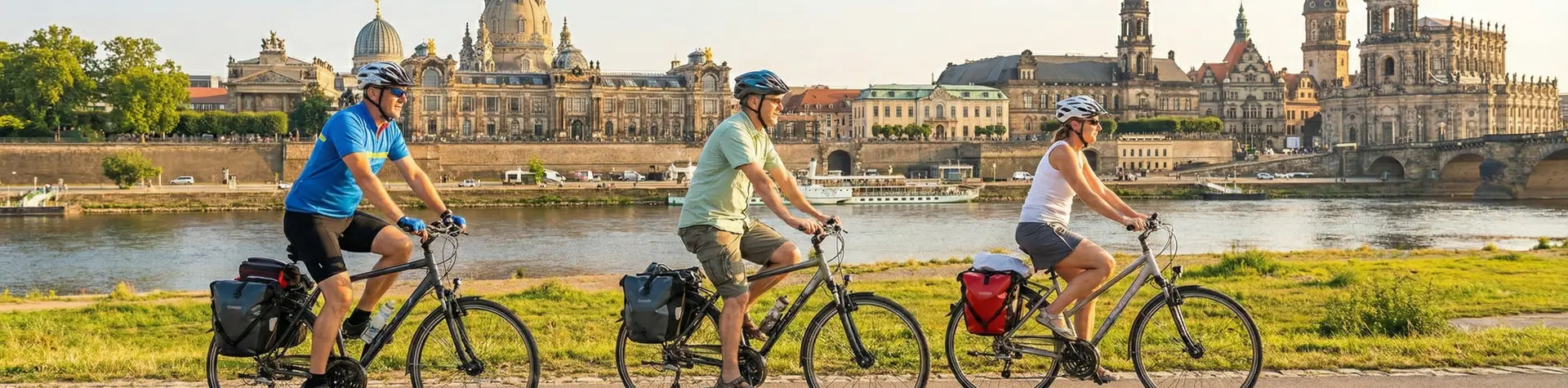
The Danube Cycle Path is a well-marked, mostly flat long-distance route running along one of Europe's great rivers. The classic cycling holiday covers Passau to Vienna (around 320 km, 5–7 days) or extends to Budapest (an extra 300 km). It is suitable for everyday cyclists, families, and anyone who wants a rewarding multi-day tour without serious climbs.
Who is this for
This guide is for anyone planning a self-guided or guided cycling holiday along the Danube — whether you're a first-time bike tourer wondering what to expect, or an experienced cyclist scoping out the route before booking. The Passau–Vienna–Budapest corridor is the heartland of Central European cycling tourism and the focus of most organised tours.
The route at a glance
The full EuroVelo 6 runs roughly 3,650 km from Saint-Nazaire on the Atlantic coast to the Black Sea. For cycling holidays, the practical focus is a much shorter corridor:
- Passau to Vienna: ~320 km — the most popular segment, almost entirely in Austria
- Vienna to Budapest: ~300 km — flatter, more open landscape through Slovakia and Hungary
- Passau to Budapest: ~620 km — the classic two-week Danube tour
The route is waymarked in Austria with blue-and-white cycle signs and in most sections follows a dedicated cycle path right alongside the river. Surface quality varies — expect smooth asphalt on most Austrian sections, compacted gravel paths in some rural stretches, and short on-road segments in villages.
Terrain and difficulty
The Danube Cycle Path has a well-deserved reputation as a beginner-friendly route. The vast majority of the Austrian section is flat or gently rolling, with the river doing the orienteering for you. Total elevation gain from Passau to Vienna is modest — typically under 1,000 metres spread across several days.
The one notable exception is the Schlögener Schlinge loop near Aschach, where the river bends sharply and the official route climbs briefly away from the water. It's a short, manageable hill. A lower detour exists for those who prefer to avoid it entirely.
The stretch from Vienna to Budapest is even flatter — Hungary's Pannonian Plain offers essentially zero climbing. Wind is more of a factor on this section than hills.
Key sections and highlights
Passau to Linz (~130 km)
The tour begins in Passau, the Bavarian city where three rivers meet — the Danube, Inn, and Ilz. The cathedral and the old town perched on a narrow peninsula make for a memorable start. From Passau the path enters Austria almost immediately and follows the river through increasingly dramatic gorge scenery. This first section includes the Nibelungengau, a series of rugged hills pressing close to the river, and the charming town of Grein with its clifftop castle. Linz, Austria's third-largest city, marks the end of this leg and offers excellent museums, a vibrant food scene, and an easy train connection if anyone needs to bail out.
Linz to Krems — the Wachau Valley (~100 km)
This is widely considered the most beautiful section of the entire Danube Cycle Path. The Wachau Valley is a UNESCO World Heritage Site — a narrow, steep-sided gorge filled with apricot orchards, terraced vineyards, medieval castles on every promontory, and perfectly preserved market towns. Key stops include Melk (the imposing Benedictine monastery perched above the river is unmissable), Spitz, Dürnstein (where Richard the Lionheart was imprisoned), and Krems, the gateway to the Wachau and one of the region's main wine towns. Plan extra time here — it's easy to spend a full day covering 40 km when there's a wine tavern every few kilometres.
Krems to Vienna (~80 km)
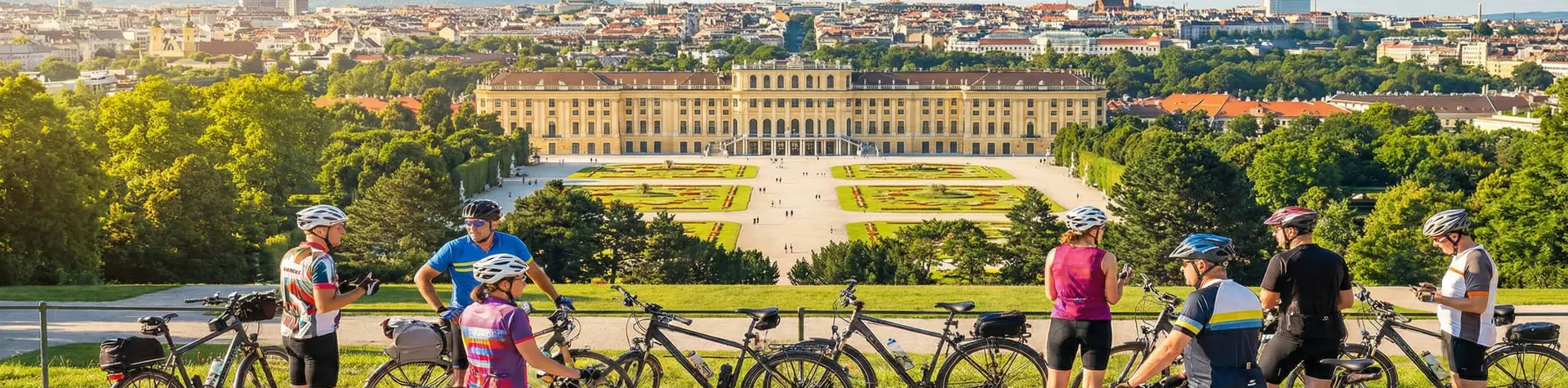
Below the Wachau the valley widens and the landscape becomes more pastoral. The route passes through the Kamptal wine region before arriving at the edge of Vienna. The city approach along the Danube is long but well-signed. Vienna itself rewards a rest day — the Ringstrasse, Schönbrunn Palace, the coffee house culture, and the sheer density of world-class museums justify at least two nights.
Vienna to Budapest (~300 km)
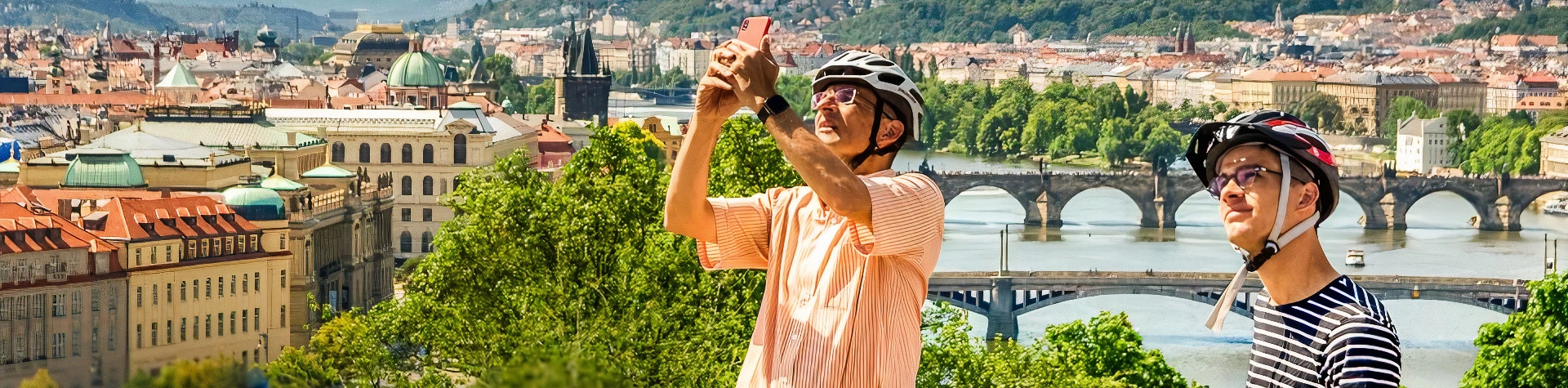
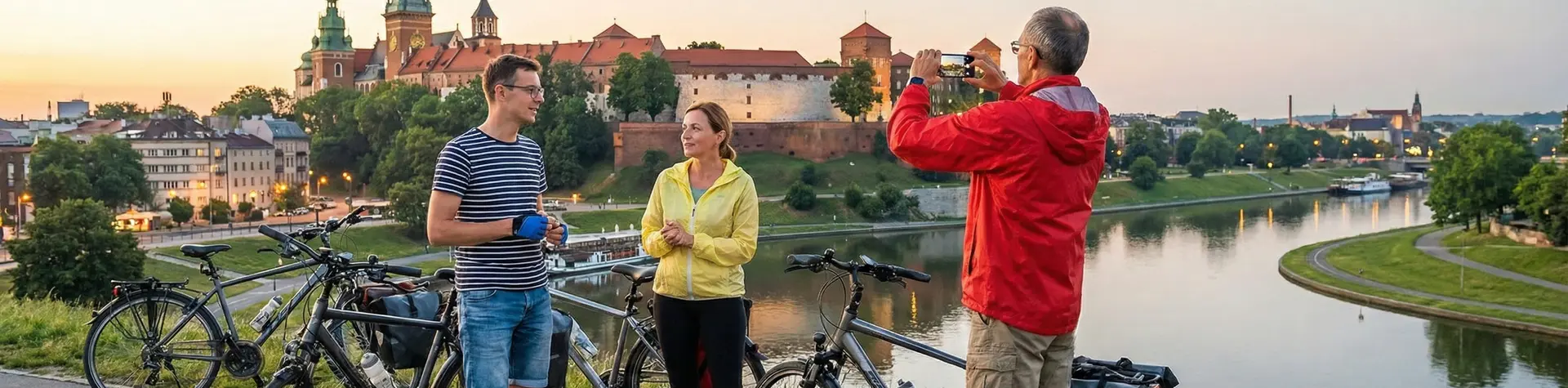
East of Vienna the Danube enters a broader, flatter landscape. The first major stop is Bratislava, Slovakia's compact capital, reachable from Vienna in a single easy day. The route then continues through the Slovak and Hungarian countryside — wide skies, villages, and the quieter, wilder character of the river before it reaches Budapest. The Hungarian capital's dramatic entry — the Parliament building, the chain bridges, Buda Castle on the hill — is one of the great arrivals in European cycling.
Distances and suggested daily stages
| Day | From | To | Distance | Notes |
|---|---|---|---|---|
| 1 | Passau | Obernzell / Engelhartszell | ~45 km | Easy warm-up day |
| 2 | Engelhartszell | Linz | ~65 km | Schlögener Schlinge detour option |
| 3 | Linz | Grein / Ybbs | ~60 km | Nibelungengau scenery begins |
| 4 | Grein | Melk | ~55 km | Wachau entry, visit Melk Abbey |
| 5 | Melk | Krems | ~35 km | Short day — linger in the Wachau |
| 6 | Krems | Tulln / Klosterneuburg | ~60 km | Wide valley, easier riding |
| 7 | Tulln | Vienna | ~40 km | City arrival, rest day recommended |
Accommodation
The Danube Cycle Path is one of the best-serviced cycling routes in Europe for accommodation. Cycling-friendly guesthouses (Radlerherbergen) and hotels are found in virtually every town along the Austrian section. Most offer secure bike storage, drying rooms for wet gear, and early breakfast. In the Wachau in particular, book well ahead in summer — the valley fills up fast in July and August. Self-guided tour operators handle all bookings and move your luggage between hotels, which removes the biggest logistical headache of the route.
Navigation
In Austria the signage is excellent and you can ride the whole route without a GPS by following the blue Donauradweg signs. A paper map or downloaded GPX track is nonetheless recommended as a backup, especially around Linz and Vienna where urban signage can be confusing. The Komoot and Outdooractive apps both have high-quality Danube Cycle Path tracks available for free download.
When to go
May and June are the sweet spot — long days, the apricot trees in the Wachau are blossoming, accommodation is available, and temperatures are comfortable for cycling (18–25°C). September is the harvest season and arguably the most atmospheric time to ride the Wachau, with grape-picking underway and wine taverns in full swing. July and August are peak season — busier, hotter (sometimes over 35°C), and more expensive, but the river campgrounds are open and evenings are long. October is possible but days shorten quickly and some guesthouses close after mid-month.
Practical tips
- Carry a small lock — you'll want to leave your bike outside cafés and wine taverns frequently
- Austrian cycle paths sometimes divert from the river bank without warning — follow signs rather than the river
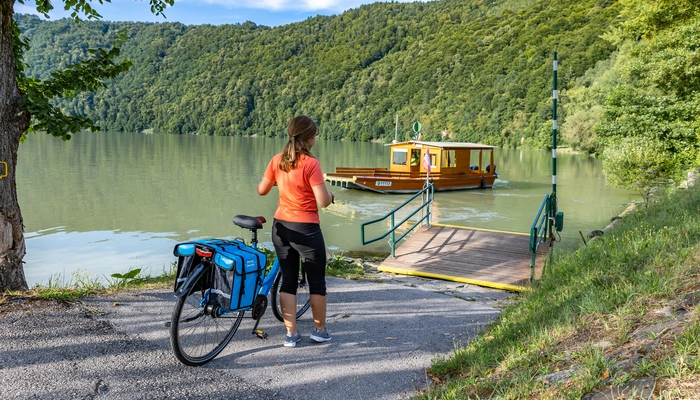
- The Wachau ferry crossings (Fähren) let you swap between the north and south bank — useful for varying the route or accessing accommodation on the opposite side
- Book the Wachau section's accommodation at least 2–3 months ahead in July/August
- Pack a rain jacket — afternoon thunderstorms are common in summer
- Euros are accepted throughout Austria; Hungary uses forints — exchange a small amount before crossing the border
- Trains run alongside the river and connect most towns, making it easy to shorten any day or recover from mechanical issues
- E-bikes are widely available for rental if you want extra assistance on the longer days
Recommended tours
We offer several guided and self-guided tours along the Danube Cycle Path, from the classic Passau–Vienna week to the full Passau–Budapest fortnight. All include luggage transfer, pre-booked accommodation, and detailed route notes. Browse the options below to find the length and style that suits you best.