Quick answer
Austria offers some of the best cycle touring in Europe, with excellent waymarking, a dense network of cycling-friendly accommodation, and routes to suit every level — from the famously flat Danube Cycle Path to challenging Alpine stages. The country is compact enough that you can combine river cycling with mountain scenery in a single trip.
Who is this for
This guide is for anyone planning a cycling holiday in Austria, whether as part of a longer multi-country tour or as a standalone destination. It covers the main routes, regional highlights, practical logistics, and what to expect on the road. Austrian cycle tourism is mature and well-organised — it's an ideal country for first-time bike tourists as well as experienced long-distance riders.
Why Austria for cycling
Austria punches well above its weight as a cycling destination. A few reasons:
- Infrastructure: Austria has invested heavily in cycle path networks. Most major routes follow dedicated off-road paths rather than busy roads, and signage is consistently excellent.
- Accommodation density: Cycling-friendly guesthouses, inns, and hotels are found every 20–40 km on all the major routes. Bike storage, drying rooms, and early breakfast are standard offerings.
- Route variety: River routes, Alpine crossings, lake circuits, and vineyard trails coexist within a small country.
- Food and drink culture: Austrian food is hearty and well-suited to cycling appetites. The wine regions — Wachau, Kremstal, Weinviertel — are a highlight in their own right.
- Safety: Austria is a safe country with low traffic on rural roads and good driver behaviour toward cyclists.
Main cycling routes in Austria
Danube Cycle Path (Donauradweg)
Austria's flagship cycling route and the country's most popular long-distance trail. The path enters Austria from Germany at Passau and runs east to the Slovak border near Bratislava, covering roughly 450 km through some of the most beautiful river scenery in Europe. The Wachau Valley section — a UNESCO World Heritage Site between Melk and Krems — is the highlight: steep vineyard terraces, medieval castles, and apricot orchards crowding both banks of a narrowing river gorge. For a detailed description of the Danube Cycle Path, see our full Danube guide.
Inn Cycle Path (Innradweg)
The Inn runs from its source in the Swiss Alps through Austria's Tyrol region and into Germany at Passau, where it joins the Danube. The Austrian section — roughly 300 km from the Swiss border to Passau — combines dramatic Alpine scenery around Innsbruck with more relaxed river riding further north. It's a harder route than the Danube, with some Alpine passes and technical sections, but rewards with spectacular mountain scenery and the lively Tyrolean culture of Innsbruck and its surroundings.
Mur Cycle Path (Murradweg)
The Mur rises in the Styrian Alps and flows south through Austria's "Green Heart" — the Steiermark region — before entering Slovenia. The Austrian section (around 450 km from the source to the Slovenian border) passes through the regional capital Graz, one of Austria's most liveable and underrated cities. The upper Mur Valley near Murau has a raw, forested character; the lower valley around Graz opens into wine country. A moderately challenging route with some climbing in the upper section.
Salzach Cycle Path (Salzachradweg)
Running from Salzburg north to the Inn, this route passes through the Salzburg lake district — a region of Alpine lakes, market towns, and quintessential Austrian countryside that looks exactly like the opening of The Sound of Music, because it is. The route is mostly flat to rolling and combines well with a city stop in Salzburg itself.
Tauern Cycle Path (Tauernradweg)
Austria's most dramatic point-to-point cycling route. The Tauern path climbs from Krimml in the Zillertal Alps (starting at the highest waterfall in the Alps) and descends via the Salzach valley to Salzburg, then continues to Passau. The descent from Krimml to Salzburg (around 280 km) is almost entirely downhill — a thrilling and accessible way to experience Alpine cycling without needing mountain fitness. The climb to the start at Krimml is the only serious effort, and many cyclists arrive by bus or train.
Austria's cycling regions
Lower Austria (Niederösterreich)
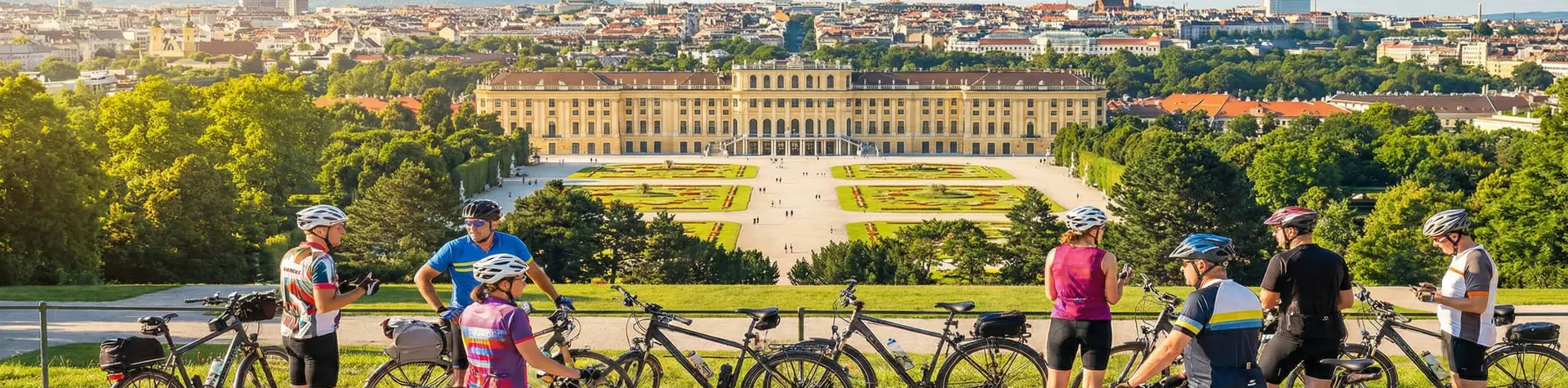
The federal state surrounding Vienna contains the Wachau Valley, the Waldviertel (a forested highland plateau with quiet lanes and medieval fortresses), and the Weinviertel wine region north of Vienna. It's the most diverse cycling region in the country, accessible from Vienna by train or bike.
Upper Austria (Oberösterreich)
The western entry point for most Danube cycling tourists, Upper Austria includes Linz, the Mühlviertel highlands north of the Danube, and the lakeland of the Salzkammergut. The Salzkammergut — a cluster of Alpine lakes between Salzburg and the Styrian Alps — offers outstanding scenery and excellent cycling infrastructure.
Tyrol
Austria's Alpine heartland and home to Innsbruck. Cycling here means mountain roads and passes — the Ötztaler Radmarathon, one of Europe's hardest one-day sportives, crosses four Alpine passes in this region. But there are also excellent valley routes along the Inn and its tributaries for those seeking mountain scenery without mountain climbing.
Styria (Steiermark)
Rolling wine hills, the Mur river valley, and Graz — Austria's second city and one of its most enjoyable. The South Styrian Wine Road (Südsteirische Weinstraße) is a network of cycling routes through Austria's wine country near the Slovenian border, combining vineyard scenery with excellent local food and wine.
Logistics: getting there and around
Austria's train network is excellent and bikes are well-accommodated. The ÖBB Railjet connects Vienna, Salzburg, Linz, Graz, and Innsbruck, and most regional trains carry bicycles for a small supplement. From western Europe, the main entry points by train are through Munich to Salzburg or Innsbruck, and through Prague or Budapest to Vienna.
Bike rental is available in most tourist towns and at many train stations — the ÖBB nextbike system and various local rental shops offer day and week rentals, including e-bikes. Quality has improved significantly in recent years and rental bikes on the Danube path are now generally road-worthy for touring.
When to go
May–June is optimal for most Austrian cycling routes — long days, mild temperatures, and the spring landscapes at their greenest. September brings harvest season to the wine regions and is arguably the finest month for the Wachau. July and August are peak tourist season — busier, hotter, and more expensive, but excellent for Alpine routes where higher altitude keeps temperatures manageable. April is possible on the lower Danube valley section but mountain routes remain snowy above 1,500 m until May.
Practical tips
- Book accommodation 2–3 months ahead for July–August on the Danube section, especially in the Wachau
- Austria uses the Euro; credit cards are widely accepted but carry some cash for rural guesthouses and ferry crossings
- Cycling-friendly guesthouses display the Bett+Bike symbol — a reliable indicator of bike storage and early breakfast
- Austrian drivers are generally respectful of cyclists; cycle paths often run alongside main roads but are separated
- Thunderstorms are common in summer afternoons — plan to arrive at accommodation by 3–4pm if possible
- Many rural guesthouses offer half board (dinner included) — worth taking if you're tired from cycling and don't want to search for restaurants
- The cycle.travel and Komoot apps work very well for Austrian cycle routing
Recommended tours
Our Austria cycling tours cover the Danube from Passau to Vienna and onward to Budapest, with options for self-guided and guided formats. All include pre-booked cycling-friendly accommodation, luggage transfer, and detailed daily route notes. Browse our tour listings to find the right trip for your fitness level and travel style.