Quick answer
Prague to Dresden by bike is a 170 km route along the Elbe river, taking 3–4 cycling days. The highlight is the Elbe Sandstone Mountains (Elbsandsteingebirge / Bohemian and Saxon Switzerland national parks) — a landscape of towering sandstone spires, deep gorges, and river viewpoints that neither city fully prepares you for. Both endpoints are world-class destinations; the riding between them is genuinely spectacular.
Who is this for
This route suits cyclists who want more than just a flat river path — there is real terrain here, particularly through the national park section. It's ideal for anyone flying into or out of Prague or Dresden, as a standalone long weekend break, or as the opening leg of a longer Elbe Cycle Path tour toward Hamburg. A reasonable base fitness level is needed for the national park climbs; the rest is straightforward river riding.
Route overview
The route follows the Elbe Cycle Path (EuroVelo 7 / Elberadweg) for its entire length. From Prague you ride north along the Vltava until it joins the Elbe near Mělník, then follow the Elbe through increasingly dramatic scenery to the German border. Navigation is straightforward — the river is your guide, and signage improves significantly once you cross into Germany.
Stage by stage
Day 1 — Prague to Ústí nad Labem (~100 km, or split into 2 days)
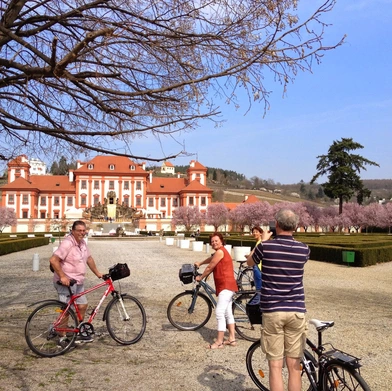
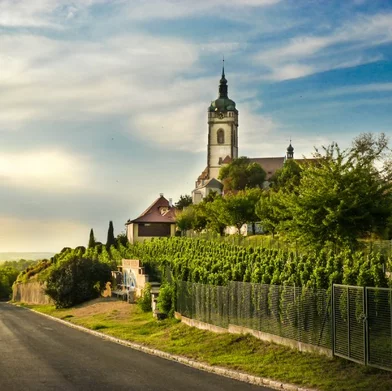
Leaving Prague, the route heads north through the Bohemian lowlands. The terrain is mostly flat to gently rolling, passing through a mix of small Czech towns and agricultural countryside. The Elbe winds through a series of broad meanders. Mělník, perched on a bluff above the confluence of the Vltava and Elbe, is a worthwhile stop — the castle and the wine cellars beneath it are the reason locals have been proud of this town for centuries. Further north, the landscape begins to change as the hills crowd closer to the river. Ústí nad Labem is an industrial city without much charm but has good transport connections and accommodation if you want to split the day.
Consider breaking this stage: Prague to Mělník (~45 km) is a very pleasant first day, staying overnight in the wine town before the long push north.
Day 2 — Ústí nad Labem to Bad Schandau (~70 km)
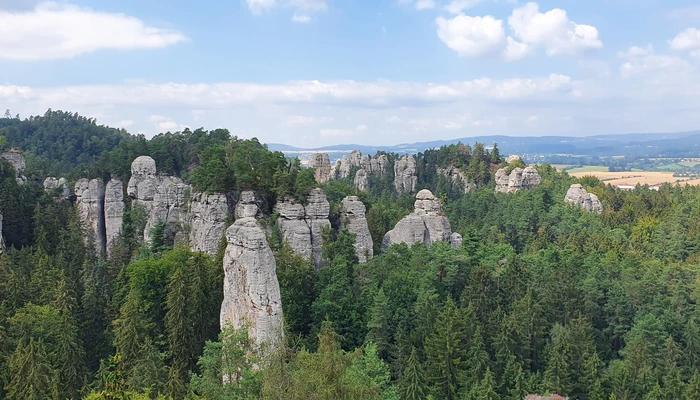
This is where the route becomes extraordinary. Below Ústí the Elbe narrows and enters the Bohemian Switzerland National Park on the Czech side. The sandstone formations begin modestly and grow progressively more dramatic — flat-topped mesas, isolated rock towers, and vertical cliff faces rising hundreds of metres from the river bank. The path through the national park switches between the Czech and Saxon sides of the river (which is also the national border here) via ferry crossings. The Pravčická brána — the largest natural rock arch in Europe — is a short hike from the river near Hřensko; it's worth the detour even if you have to lock your bike and climb for an hour. Crossing into Germany at Bad Schandau, the landscape continues in the same vein — this is Saxon Switzerland, the German national park that mirrors its Czech neighbour across the river. Bad Schandau is a small spa town with good accommodation and a restored riverside feel.
Day 3 — Bad Schandau to Dresden (~50 km)
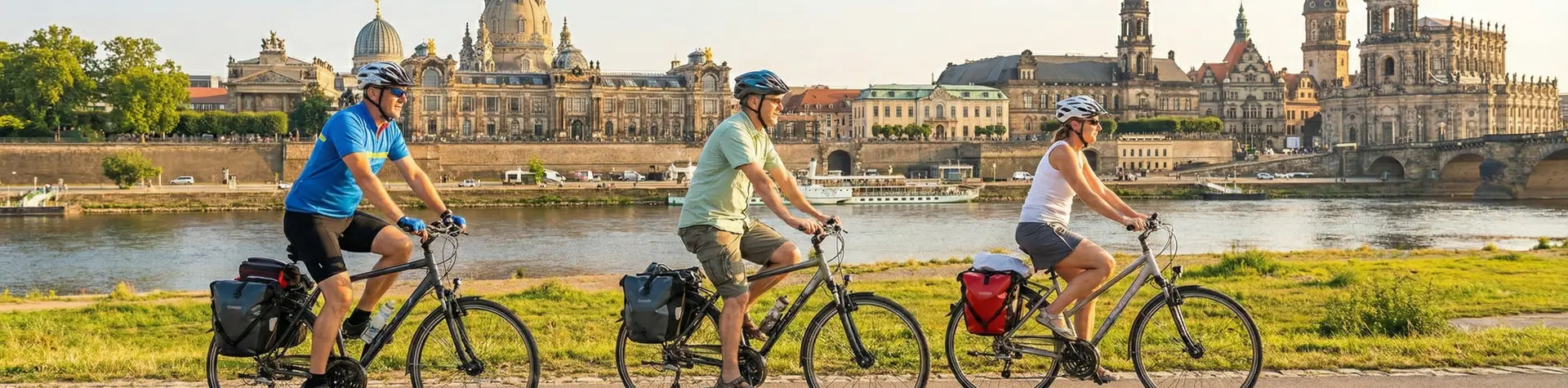
The final section follows the Elbe out of the national park and into the Saxon vineyards. The sandstone formations gradually give way to gentler hills covered in terraced vines — the Sächsische Weinstraße produces Germany's most northerly serious wines, mostly Riesling and Müller-Thurgau. The approach to Dresden is along a broad, flat river valley with the city's famous skyline appearing gradually. The Blaues Wunder (Blue Wonder), a 19th-century steel suspension bridge, marks the beginning of the Dresden urban area. The old town and its Baroque centrepiece — the rebuilt Frauenkirche — is worth a full rest day.
Terrain and difficulty
The Bohemian Switzerland section is the most demanding part of the route. The path climbs away from the river in several places to cross headlands and navigate around cliff sections. Cumulative elevation gain through the national park is roughly 400–600 metres in a single day — not extreme, but enough to feel if you're not used to loaded touring. Outside the national park, terrain is flat or gently rolling. Total elevation gain Prague to Dresden is around 1,200 metres.
Navigation
In Germany the Elberadweg waymarking is reliable. In the Czech Republic it's patchier — a GPS track or downloaded Komoot route is strongly recommended for the Czech section, especially through the national park where the path occasionally leaves the riverside and becomes unclear. The Elberadweg official GPX file is available free from the German ADFC cycling association website.
Border crossing
The Czech Republic and Germany are both Schengen countries — there is no passport control at the border. The crossing at Hřensko is a minor road crossing used by cyclists and pedestrians. No documentation beyond a standard EU or valid national ID is required.
Combining with onward travel
Dresden has excellent rail connections. From Dresden Hauptbahnhof you can reach Prague (2.5 hours), Berlin (2 hours), or continue the Elbe Cycle Path north toward Hamburg. The route also combines naturally with the broader Elbe Cycle Path for those wanting a longer journey.
When to go
May–June and September are the best months. The national park is beautifully lit in May with fresh greens and wildflowers; September brings autumn colour and harvest time in the Saxon vineyards. July and August are warm but the national park paths can feel busy with day hikers and tourists at the popular viewpoints. Spring flooding (March–April) occasionally closes riverside path sections in both countries.
Practical tips
- Bring Czech koruna (CZK) as well as euros — most Czech businesses do not accept euros
- The ferry crossings in the national park are essential for routing — check timetables in advance as some run limited hours
- Tyres of at least 35mm are recommended for the national park gravel sections
- Book accommodation in Bad Schandau ahead in summer — it's a small town and fills up
- The climb out of Hřensko on the Czech side is steep and on a road — walk it if loaded
- Water is readily available in German sections but can be sparse in rural Czech stretches — carry a full bottle out of Prague
- Dresden is a UNESCO candidate city — plan at least one full rest day to explore it properly
Recommended tours
This route can be ridden as a standalone trip or as the opening section of a longer Elbe tour. We offer self-guided packages with pre-booked accommodation and luggage transfer. Browse our listings for Prague–Dresden and Prague–Hamburg options.