Quick answer
The most car-free multi-day cycling routes in Europe are the major river paths — the Austrian Danube Cycle Path (Passau to Vienna) runs almost entirely on a dedicated off-road cycle path alongside the river. The Elbe Cycle Path in Germany, the Loire à Vélo in France, and the Dutch national route network are similarly car-free on the vast majority of their surfaces. For Central Europe, the Austrian section of the Danube is the benchmark.
Who is this for
Car-free routes matter most to: nervous cyclists returning to the saddle after years off; parents cycling with children; cyclists who've been put off touring by previous experiences on busy roads; and anyone who wants to genuinely relax on a cycling holiday without watching their mirrors. Traffic-free cycling transforms the experience — conversation is possible, wildlife isn't startled, and the pace feels natural rather than urgent.
What does "car-free" actually mean on cycle routes?
Almost no long-distance cycling route is 100% car-free — there will always be short on-road sections through village centres, access roads, or sections where the dedicated path hasn't been built yet. The realistic question is: what proportion of the route is on dedicated cycle paths away from motor traffic?
| Route | % car-free | Notes |
|---|---|---|
| Austrian Danube (Passau–Vienna) | ~90% | Short on-road sections in villages |
| Netherlands LF routes | ~95% | World's best cycling infrastructure |
| Loire à Vélo (France) | ~85% | Some quiet road sections in rural areas |
| Elbe Cycle Path (Germany) | ~80% | Some gravel dyke sections, minor roads |
| Rhine Cycle Path (Germany) | ~75% | More road sections than Danube |
| Czech section of Elbe | ~60% | Less developed infrastructure |
Best car-free cycling routes in Central Europe
1. Austrian Danube Cycle Path — the gold standard
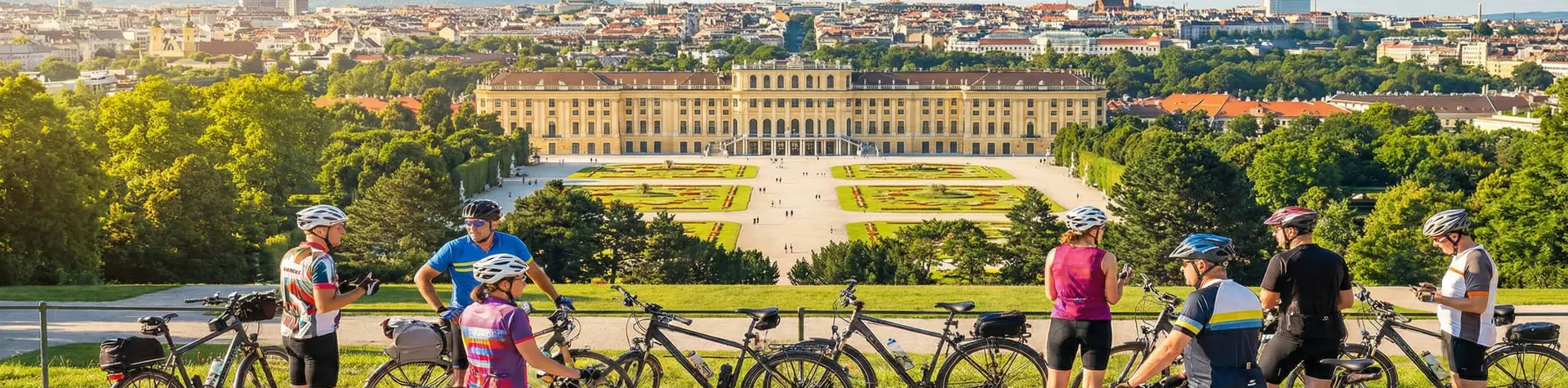
The Austrian section of the Danube Cycle Path from Passau to Vienna is the most car-free long-distance cycling route in Central Europe. The Austrian government and regional authorities have invested decades in building a dedicated riverside cycle path that separates riders from traffic almost entirely. Through the Wachau Valley, the path is a sealed asphalt track running within metres of the river bank — no traffic, no exhaust, no road noise. Through the gorge sections above Linz, the path uses river-bank tracks, converted railway alignments, and dedicated dyke paths to stay away from the roads entirely.
The short on-road sections that do exist are typically through village centres on quiet lanes with low traffic. Most cyclists complete Passau to Vienna without cycling on anything more stressful than a residential street.
2. Danube Island (Donauinsel), Vienna
A remarkable piece of urban cycling infrastructure: the Donauinsel is a 21 km long artificial island in the middle of the Danube in Vienna, entirely pedestrian and bicycle-friendly. The island's dedicated cycle path connects the city centre to the national park at the northern edge of Vienna without a single traffic junction. It's the arrival and departure route for most Danube Cycle Path riders entering or leaving Vienna, and it works exceptionally well.
3. Elbe Cycle Path (Germany) — dyke paths away from traffic
The German Elbe Cycle Path has been progressively improved over the past two decades. The majority of the route between Dresden and Hamburg now uses converted railway beds, flood protection dyke tops, and riverside tracks that keep cyclists well clear of motor traffic. The dyke sections in particular — elevated slightly above the surrounding countryside with the river on one side and flood meadows on the other — create a cycling experience of genuine solitude and space.
The less car-free sections are in the Czech Republic, where the route occasionally uses busier roads through industrial sections around Ústí nad Labem. The German section from Bad Schandau northward is the best.
4. Eger (Ohře) Cycle Path, Czech Republic
One of the Czech Republic's better-developed cycle routes, the Eger/Ohře path follows the river through West Bohemia from Karlovy Vary to the German border, largely on riverside tracks and quiet lanes. It connects naturally with the Elbe Cycle Path for a longer route and passes through a pleasantly undervisited part of Bohemia.
Best car-free cycling outside Central Europe
5. Netherlands — the world's best cycling infrastructure
The Netherlands is the global benchmark for car-free cycling infrastructure. The national LF route network uses dedicated cycle paths, converted railway lines, and car-free rural tracks to connect the entire country. Traffic encounters are minimal — cyclists have right of way at most junctions, and cycle paths are physically separated from roads by kerbs, barriers, or significant distance. For completely car-free cycling, the Netherlands is the only serious answer.
Best routes for car-free touring: LF1 (coast route, North Sea), LF3 (river route, Rhine delta), LF22 (Maas/Meuse valley).
6. Loire à Vélo, France
France's showcase cycling route combines car-free sections on converted railway lines (voies vertes), dedicated riverside paths, and quiet rural lanes. The infrastructure is well-maintained and clearly signed. The best car-free sections are around Tours, Saumur, and the estuary below Nantes. Some stretches through wine country use quiet roads, but traffic is light and drivers are accustomed to cyclists.
7. Drau Cycle Path (Drauradweg), Austria/Italy
Running from the Tyrolean Alps down through Carinthia to Slovenia, the Drau path uses a former narrow-gauge railway alignment for significant stretches — creating a car-free, gravel-surfaced cycling corridor through spectacular Alpine scenery. Less well-known than the Danube but strongly recommended for its mountain character and genuine car-free quality.
How to verify car-free quality before you book
Tour operators vary in how accurate they are about traffic exposure. Before booking, check:
- Download the GPX track and view it on Komoot or Strava — the route type data shows dedicated cycle paths vs. roads
- Read recent ride reports on cycling forums (the German ADFC forum and the English-language CycleBlaze blog have good coverage)
- Ask the tour operator directly: "What percentage of the route is on dedicated cycle paths?" — a good operator will know the answer precisely
- Check OpenCycleMap (a free overlay on OpenStreetMap) which shows dedicated cycle infrastructure in detail
When to go
Car-free routes are comfortable across the main cycling season (April–October). River path sections may be closed after spring flooding (March–April). Summer weekends on popular sections like the Wachau can be busy with day cyclists — consider weekday riding or late-season (September) for more solitude.
Practical tips
- "Car-free" doesn't mean surface-free — expect everything from smooth asphalt to compacted gravel on the same route; bring appropriate tyres
- River paths can be shared with pedestrians and e-scooters — particularly around cities and popular sections; a bell is useful
- On converted railway paths (voies vertes, Bahntrassenradwege), surfaces are often compacted gravel — slower but quiet and traffic-free
- Check flood warnings for river-bank paths before departure in spring
- The Austrian Danube path has very few road crossings — but where they do occur, they're often at busy main roads; pay attention at these points
Recommended tours
Our Austrian Danube tours use the most car-free sections of the Danube Cycle Path between Passau and Budapest. Browse our self-guided and guided tour listings to find the route and length that suits your confidence level and cycling experience.