Quick answer
Food on Central European cycling holidays is hearty, local, and usually excellent value. Breakfast is almost always included in your accommodation; lunch is a café stop mid-route; dinner is at a local restaurant near your evening's guesthouse. Vegetarians are well catered for in cities; rural options can be meat-heavy but are improving.
Who is this for
Anyone wondering how eating works on a multi-day bike tour — what's included, how much lunch costs, where you'll actually eat dinner, and how to handle dietary requirements.
Breakfast: the fuel you need
In Austria, Czech Republic, Slovakia, and southern Germany, guesthouse breakfast is genuinely one of the highlights. Expect a spread of: sliced bread and rolls, cold cuts (ham, salami), cheese selection, hard-boiled eggs or scrambled eggs, yoghurt, cereals, fresh fruit, jam, butter, and coffee/tea. Austrian breakfasts often include local honey and regional cheese. This is not a continental croissant-and-coffee situation — it's a full meal.
In Hungary, breakfasts are simpler: bread, butter, jam, cold cuts, coffee. Compensate by eating more at lunch.
Breakfast time is typically 7–9am. If you need to leave before 7am (say, to beat summer heat), tell your host the night before — they can often arrange an early box or leave things out for you.
Lunch: the mid-ride stop
Lunch is your main fuelling opportunity and a social highlight of the day. Most routes pass through villages and small towns with cafés, bakeries, and restaurants roughly every 15–30km.
What you'll find
- Czech/Slovak: Hospoda (pub) serving daily lunch specials — soup + main for €6–10. Classics: svíčková (beef in cream sauce), svečená (roast pork), goulash, fried cheese. Big portions.
- Austrian: Gasthaus or Gasthof — slightly more formal, €12–18 for a main. Schnitzel, Tafelspitz (boiled beef), Beuschel (offal ragout for the adventurous). Beer gardens in summer are excellent.
- German (Elbe Path): Similar to Austria. Bratwurst, pretzels, and excellent coffee cake at bakeries. Döner kebabs everywhere for quick stops.
- Hungarian: Étterem (restaurant) — goulash, paprika chicken, lángos (fried dough with toppings). The cheapest food of any country on these routes. Lunch for two with drinks: €15–20.
Bike-friendly stops
Established routes like the Danube Cycle Path have services specifically for cyclists: ice cream kiosks, juice stands, and simple cafés positioned at obvious stopping points. The Gasthäuser along the Danube in Austria are well used to cyclists arriving with helmets and panniers — you don't need to change or look presentable.
Packed lunch option
Some tour packages include a packed lunch, or your guesthouse can prepare one on request. Most riders prefer to stop at a café — it breaks the day nicely and is part of the experience. But if you're on a section with sparse services (some parts of Slovakia or eastern Hungary), ask your operator where the lunch gaps are and plan accordingly.
Dinner: eating well at the end of the day
Dinner is almost never included in standard bike tour packages — you pay at local restaurants each evening. Budget roughly €15–30 per person for dinner including one beer or glass of wine, depending on the country (Hungary cheapest, Austria most expensive).
Your tour operator's roadbook typically recommends 2–3 restaurants near each night's accommodation. These are generally reliable suggestions — the operators have pre-selected places that are cycle-tourist friendly, have good food, and won't turn you away in cycling kit.
When to arrive
Austrian rural restaurants often stop taking dinner orders at 8:30–9pm and close the kitchen. Arrive by 7–7:30pm to be safe. Czech and Hungarian restaurants are more flexible. In July and August, popular restaurants in tourist towns can be fully booked — it's worth asking your guesthouse to call ahead for a table.
Wine and beer culture
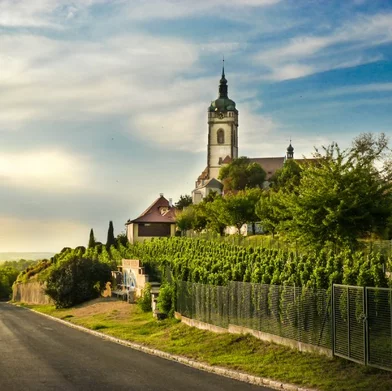
Cycling through wine country is one of the genuine pleasures of these routes. The Wachau region (Danube, Austria) produces Grüner Veltliner and Riesling from steep terraced vineyards you cycle past. In the evening, a Heuriger (wine tavern) is a must — locals bring home-grown cold food, the wine comes directly from the producer, and the atmosphere is relaxed. Moravia on the Greenways Prague–Vienna route is equally excellent for wine, at half the price of Austria.
Czech beer needs no introduction. A half-litre of fresh-poured Pilsner Urquell or Kozel in a riverside hospoda costs €1.50–2.50. This is not the moment to order cocktails.
Dietary requirements
Vegetarian
Cities (Prague, Vienna, Budapest, Dresden) have good vegetarian options including dedicated restaurants. In rural areas, vegetarian options exist but are limited to: fried cheese, pasta/gnocchi, egg dishes, salads, and sometimes a vegetable soup. In Austrian Gasthäuser, ask for "Ich bin Vegetarier" — they almost always have something. Czech rural pubs are harder — the menu may literally be pork in three preparations.
Strategy: eat well at breakfast, carry snacks for gaps in rural sections, and don't expect a creative vegetarian dish at every village stop.
Vegan
Vegan eating in Central European rural areas is genuinely challenging. It's improving rapidly in cities — Prague and Vienna both have strong vegan scenes — but along rural cycling routes, expect to construct vegan meals from bread, vegetables, and whatever you can piece together. Carry protein bars or trail mix as backup.
Gluten-free
Gluten-free options are available in cities. In rural guesthouses and local restaurants, awareness is inconsistent. When booking, flag this to your tour operator — they can note it with individual properties who may be able to accommodate you with advance notice.
Halal/Kosher
Limited outside of major cities. Vienna and Budapest have certified options but rural areas have none. Bring your own snacks and focus on naturally compliant foods (fruit, vegetables, eggs in restaurants you can verify).
What to carry on the bike
You don't need to carry much food — Central European routes are well-served with stops. But always have:
- Water: 1–1.5 litres. Refillable at almost any bar, restaurant, or petrol station for free if you ask. Tap water is safe everywhere.
- Energy snacks: Bars, nuts, or fruit for the gaps between café stops. Particularly useful on the longer rural sections in Slovakia and Hungary.
- Cash: Some small village cafés and ice cream stands are cash only. Carry €20–30 in local currency as backup (€ in Austria/Germany/Slovakia, CZK in Czech Republic, HUF in Hungary).
Budget guide
| Country | Lunch (main + drink) | Dinner (main + drink) | Beer (0.5L) |
|---|---|---|---|
| Czech Republic | €6–10 | €12–18 | €1.50–2.50 |
| Slovakia | €7–12 | €13–20 | €1.50–2.50 |
| Austria | €12–18 | €18–30 | €3.50–5 |
| Germany | €10–16 | €15–25 | €3–4.50 |
| Hungary | €5–9 | €10–16 | €1–2 |
Practical tips
- Eat a big breakfast every day — it's included, it's good, and it powers your first 30km
- In summer, stop for lunch by 12:30pm to avoid the hottest midday period on the bike
- Don't skip the Austrian Heuriger experience — ask your guesthouse host which one they recommend
- If a village café looks closed, try the door anyway — in Central Europe, opening hours are suggestions
- Supermarkets (Billa, Spar, Lidl in Austria; Albert, Kaufland in Czech) are in most towns and are good for snack top-ups
- Carry a small reusable bottle — tap water refills at cafés are universally accepted and free
Recommended tours
All our tours pass through regions with excellent local food culture. The Danube Cycle Path through Austria's Wachau wine region and the Czech route through South Moravia are particular highlights for food and wine lovers. Browse our tours to find your route.