Quick answer
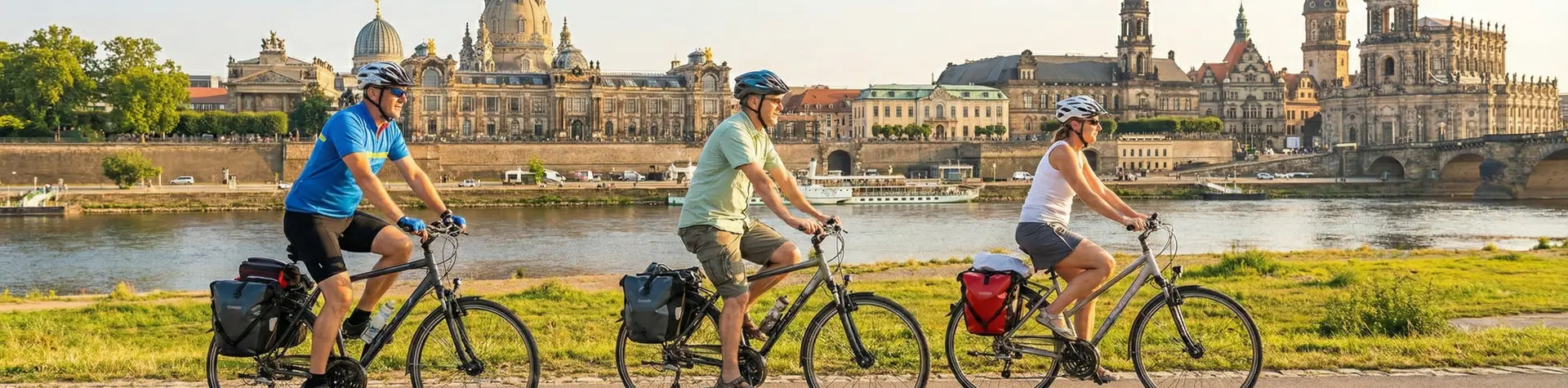
Most self-guided bike tour operators in Central Europe provide quality hybrid or trekking bikes — typically 21–27 speed, aluminium frames, with a comfortable upright geometry, rack, panniers, lock, lights, and bell. Brands vary but commonly include Trek, Cube, Ghost, and Scott. E-bikes are available on most routes at an additional cost. The bikes are serviced before each tour and supported by local mechanics if issues arise. They are not racing bikes, but they are well-suited to the distances and terrain involved.
Who is this for
Anyone booking a self-guided bike tour who wants to know what the rental bike is like before committing — spec, quality, fit, what is included, and when it makes more sense to bring your own.
The standard hire bike: what to expect
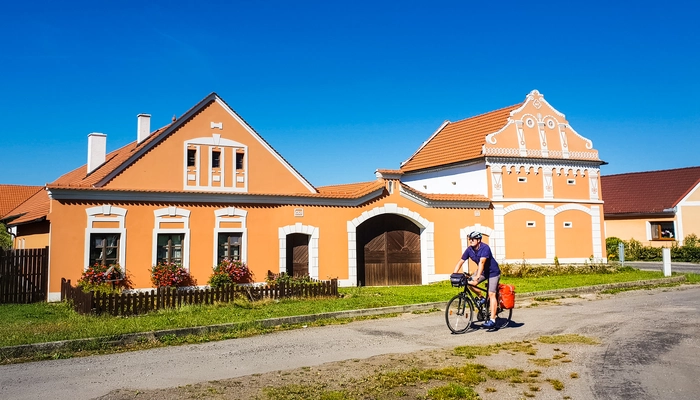
Type: hybrid / trekking bike
The vast majority of rental bikes on Central European self-guided tours are hybrid or trekking bikes — a cross between a road bike and a mountain bike, designed for comfort and reliability on mixed surfaces (tarmac paths, gravel, compacted dirt tracks).
These bikes have:
- An upright riding position — more comfortable for 5–8 hours of riding than a drop-bar road bike, easier on your back and neck
- Flat handlebars
- Medium-width tyres (37–42mm) that handle both smooth tarmac paths and occasional gravel well
- Front suspension fork on many models — absorbs vibration on cobblestone village streets and rougher track sections
- Mechanical disc brakes or V-brakes — reliable in wet conditions
This is the right bike for touring. If you're used to riding a carbon road bike at home, a hire trekking bike will feel heavy and slow — but it will be comfortable and reliable over 7 days and 400+ km in a way that a road bike is not.
Gearing
Hire bikes typically have 21 or 27 speeds (3 front chainrings × 7 or 9 rear sprockets). This provides a wide enough gear range for the typical terrain on Central European tour routes — predominantly flat or gently undulating, with occasional short climbs on routes like the Prague–Vienna Greenway.
If you are used to a 1× (single chainring) drivetrain on a modern bike, the triple chainring may feel unfamiliar at first, but it becomes intuitive quickly.
Common brands and models
Operators use a variety of brands depending on their supplier network and location. Brands commonly seen on Central European bike tours include:
- Trek 7 series / FX series — reliable, widely available, good quality
- Cube Travel / Touring — well-specified German brand with good component quality
- Ghost Square series — reliable mid-range German brand
- Scott Sub series — comfortable and well-proportioned for touring
- Various Czech brands (Author, Superior) — common on Czech-operated tours
Specific models and brands are often not specified in tour listings. If brand matters to you, ask the operator directly before booking.
What is included with the hire bike
Standard equipment on a hire bike typically includes:
- Front and rear lights (battery-powered, LED)
- Rear rack
- Rear pannier bag (or handlebar bag for small items)
- Kickstand
- Bell
- Cable lock or D-lock
- Basic repair kit: pump, tyre levers, spare inner tube
- Mudguards (fenders) — essential for wet weather and gravel paths
What is usually not included: helmet (available on request, sometimes at extra charge), cycling computer, clipless pedals, phone mount.
E-bikes: what they offer and what to check
Why choose an e-bike
E-bikes (electrically assisted bikes) are increasingly popular on self-guided tours, particularly among:
- Cyclists who want to cover more distance per day without physical exhaustion
- Couples or groups where fitness levels differ — an e-bike bridges the gap
- Riders with knee or back issues that make long days on a standard bike uncomfortable
- Older cyclists who want to continue touring at a comfortable pace
- Anyone doing routes with significant climbs (Prague–Vienna Greenway, upper Vltava sections)
E-bikes on tour use pedal-assist technology (not throttle) — the motor assists your pedalling effort rather than propelling the bike without pedalling. EU law caps motor assistance at 25 km/h. Above that speed, the motor cuts out and you ride under your own power.
Battery range and charging
Modern tour e-bikes typically have a range of 80–130 km on a full charge, depending on assistance level used, terrain, rider weight, and weather. A typical tour day of 50–70 km is well within this range on most settings.
Battery charging: the battery is either removed and charged in your hotel room (weighs 2–3 kg, plugs into a standard EU socket) or charged on the bike itself via a cable. Charging time is typically 4–6 hours for a full charge. You charge it overnight and start each day with a full battery.
Range anxiety tips:
- Start each day with a full charge — make it a habit to plug in when you arrive, before dinner
- Use the lowest assistance level that keeps you comfortable — eco or tour mode extends range significantly vs turbo
- On longer days (70+ km), stick to lower assistance modes for the first half of the day
- Ask your operator about charging points along the route for extra-long stages
E-bike weight
Tour e-bikes typically weigh 22–28 kg — significantly heavier than a standard trekking bike (12–15 kg) or a road bike (8–10 kg). This matters at two points: lifting the bike onto a train (if applicable) and carrying it up stairs at hotels without lifts. Most guesthouses have ground-floor bike storage to avoid this issue.
Bike fit: how to get the right size
Getting the right bike size matters more than the brand or model. An ill-fitting bike causes back pain, knee discomfort, and saddle soreness over multiple days.
When booking, you will typically be asked for:
- Your height — the primary sizing factor
- Sometimes your inside leg / inseam measurement
Hire bikes typically come in 4–5 sizes (S/M/L/XL or specific frame sizes like 48/52/56/60cm). The staff at your tour start point should set up the bike for you on the first morning — saddle height, handlebar height if adjustable. Do not be shy about asking for adjustments: the correct saddle height (slight bend in the knee at the bottom of the pedal stroke) is one of the biggest comfort factors on a long tour.
What if the bike has a problem?
Hire bikes on reputable tours are serviced before each tour departure. However, mechanical issues do happen — punctures, gear cable stretching, brake adjustment. Here is how support works:
- Each tour includes a support phone number for reporting mechanical issues. The local operator or their network of partners can usually arrange a bike swap, spare parts delivery, or a mobile mechanic visit.
- The repair kit on the bike covers the most common issue: a puncture. You will likely encounter one puncture in a week if you are unlucky. Knowing how to change an inner tube is a useful skill — your operator can walk you through it at the start.
- Most towns along the popular touring routes have a local bike shop — your route notes include their locations and the towns where they operate.
Should I bring my own bike instead?
This is a reasonable question. Bringing your own bike means riding equipment you know and trust. The tradeoffs:
| Hire bike | Own bike | |
|---|---|---|
| Cost | Included in tour price | Airline bike fee €50–150 each way |
| Familiarity | Takes 1–2 hours to adapt | Immediately comfortable |
| Mechanical support | Operator's network | Your own responsibility |
| E-bike option | Available from operator | Cannot fly with e-bike (battery rules) |
| Damage risk | Covered by tour insurance | Your own insurance required |
| Logistics | Simple — arrive and ride | Box, check in, reclaim, reassemble |
For most guests, a quality hire bike from a reputable operator is the simpler and ultimately more enjoyable option.
Practical tips
- Bring your own saddle if you have a specific saddle you love — it can be swapped onto the hire bike in minutes and makes a huge difference on days 4–7
- Bring your own pedals if you use clipless pedals — ask the operator to swap them at the start
- Adjust the saddle height carefully on the first morning — don't rush it
- For e-bikes: plug the charger in as soon as you check in, before dinner. Do it every night without fail.
- Report any issues (creaking, gear shifting problems, brake feel) on day 1 rather than waiting until they worsen
Recommended tours
All our self-guided tours include a quality trekking or hybrid hire bike as standard, with e-bike upgrade available. Browse the Danube, Elbe, and Prague–Vienna routes to find your ideal trip — and feel free to contact us with questions about bike spec and fit before booking.