The Quick Answer
For multi-day cycle touring — especially on the popular Central European routes like the Danube or EuroVelo paths — a trekking bike wins 95% of the time. The upright riding position reduces back and neck strain over long days, wider tyres handle mixed surfaces without drama, and rack mounts allow proper luggage carrying if needed. Road bikes are faster on tarmac and perfectly valid for experienced cyclists on paved routes without loaded luggage, but they demand more from the rider and offer less versatility. Unless you're doing a serious distance challenge on pure asphalt, rent or ride a trekking bike.
Who This Guide Is For
This guide is for:
- Cyclists deciding what bike to rent for an upcoming tour
- Road cyclists wondering whether to bring their own bike or use a rental
- Beginners choosing their first touring bike
- Experienced cyclists re-evaluating their setup after difficult days on a previous tour
Key Differences: Road Bike vs Trekking Bike
| Feature | Road Bike | Trekking Bike |
|---|---|---|
| Riding position | Aggressive, forward lean | Upright, relaxed |
| Tyre width | 23–32mm | 35–50mm |
| Handlebar style | Drop bars | Flat or riser bars |
| Luggage capacity | Limited (no standard rack mounts) | Full rack mounts front and rear |
| Speed on tarmac | Higher (less rolling resistance) | Moderate |
| Comfort over distance | Lower for most riders | Higher for most riders |
| Terrain versatility | Tarmac and smooth gravel only | Tarmac, gravel, packed dirt paths |
| Typical weight | 7–10kg | 12–16kg |
| Saddle | Narrow, performance-oriented | Wider, comfort-oriented |
Road Bike Pros and Cons for Touring
Pros
- Speed: On flat tarmac, a road bike is noticeably faster than a trekking bike at equivalent effort levels. Narrow tyres produce less rolling resistance, and the aerodynamic riding position reduces drag.
- Weight: Road bikes are lighter, which matters on climbs and when handling the bike off the saddle.
- Familiar feel: If you ride a road bike at home regularly, bringing your own — properly fitted — is an advantage over adapting to an unfamiliar rental bike.
Cons
- Riding position strain: The aggressive forward lean that makes road bikes fast in short bursts becomes genuinely uncomfortable over 5–6 hours in the saddle across multiple days. Back pain, neck strain, and hand numbness are common complaints from road cyclists on multi-day tours.
- No luggage capacity: Most road bikes lack rack mounts, which means either a saddle bag, frame bag, and handlebar bag system (which works but adds complexity and cost) or total reliance on luggage transfer — leaving you nothing to carry if transfer fails.
- Tyre vulnerability: A 25mm road tyre on a rough Danube cycle path section or gravel shortcut is asking for punctures. The same distance on a 40mm trekking tyre is unremarkable.
- International transport: Travelling with a personal road bike adds cost (bike box fees, airline charges) and risk (damage in transit) compared to renting locally.
Trekking Bike Pros and Cons for Touring
Pros
- Comfort over distance: The upright riding position distributes weight across a wider contact area and reduces strain on wrists, back, and neck. On a 7-day tour, this difference accumulates significantly.
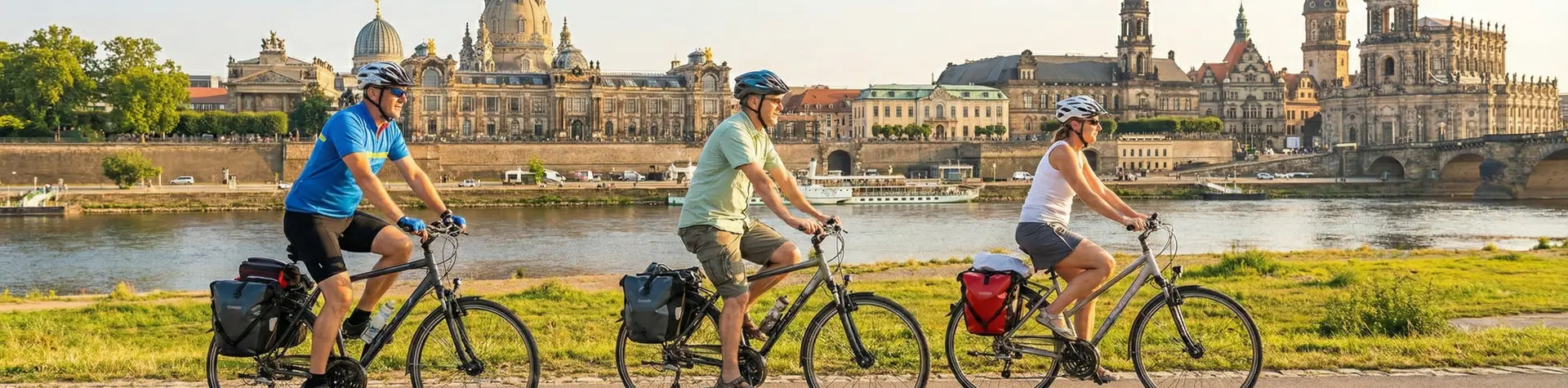
- Luggage carrying: Front and rear rack mounts, included on virtually all trekking bikes, allow you to carry pannier bags properly — weight low and balanced, not perched on your back.
- Terrain versatility: Wider tyres handle the inevitable rougher sections of cycle paths — packed gravel, cobblestones, riverside tracks — without drama.
- Availability: Trekking bikes are the standard rental option on every major cycle tour route in Central Europe. Quality, well-maintained rental fleets are readily available.
- Practicality: Mudguards (standard on most trekking bikes) keep you clean in rain. A kickstand lets you lean the bike anywhere. These small features matter across a week of daily riding.
Cons
- Slower: A trekking bike is heavier and wider-tyred than a road bike. At equivalent effort, you cover slightly less distance per hour. For most tourers this is irrelevant; for those targeting high daily distances, it matters.
- Less responsive handling: Trekking bikes are not designed for spirited riding. They're stable and predictable rather than nimble. Experienced road cyclists sometimes find this transition frustrating initially.
When a Road Bike Makes Sense for Touring
A road bike is the right choice for touring when:
- You are an experienced cyclist comfortable in an aggressive riding position for extended periods
- The route is entirely or predominantly on sealed tarmac with no gravel or rough path sections
- You are riding without loaded panniers (luggage transfer handles all bags)
- You are prioritising daily distance over comfort (targeting 80–100km+ days)
- You have a properly fitted personal road bike you know well and can transport safely
On a pure EuroVelo tarmac stretch ridden by a fit, experienced cyclist targeting high daily mileage without luggage, a road bike is entirely appropriate.
Why Trekking Bikes Dominate Touring
The reason trekking bikes are the default choice for multi-day cycle tourism is simple: they're designed for exactly this use case. The upright geometry, wider tyres, and luggage-carrying capacity are not accidental features — they were added specifically because the touring use case demands them.
Road bikes are designed for speed on smooth surfaces, often in a competitive or training context. Applied to multi-day touring with mixed terrain, luggage, and the goal of arriving comfortable rather than as fast as possible, they're a compromised tool for the job.
Most experienced cycle tourers who start with their own road bike — even very fit ones — switch to trekking bikes or touring-specific builds for subsequent trips after experiencing the accumulated discomfort of days in an aggressive position.
What About E-Bikes for Touring?
E-bikes available for rental on Central European cycle routes are almost universally built on trekking bike geometry. This makes sense: the motor and battery add weight that is best managed by the stable, upright trekking platform. The handling is predictable, the luggage capacity is retained, and the comfort over long days is maximised.
There are road e-bikes available, but they are rare as rental options on touring routes and not obviously superior for the touring use case. If you're renting an e-bike, it will almost certainly be a trekking-geometry e-bike — which is the right tool for the job.
Renting vs Bringing Your Own Bike
| Factor | Rental Bike | Own Bike |
|---|---|---|
| Cost | Daily fee (€15–30/day typical) | Transport fees (€50–150 each way) |
| Familiarity | Adjustment period needed | Fully familiar |
| Risk of damage | Operator's problem | Your problem |
| Fit | Approximate (adjustable saddle/stem) | Precise (your setup) |
| Convenience | Ready at start point | Must pack, check, collect |
For most tourers, rental is the pragmatic choice, particularly if you're renting a trekking bike anyway. Transporting a road bike internationally to use it on a route better suited to a trekking bike is a double compromise.
Practical Tips
Saddle Fit Matters More Than Bike Type
Whether you're on a road bike or a trekking bike, saddle height is the most critical adjustment for comfort and knee health. At the bottom of your pedal stroke, your leg should be almost but not fully extended — a slight bend in the knee. Too low causes knee strain; too high causes hip rocking and saddle soreness. Spend five minutes at the start of your rental to get this right, and ask the rental staff to help if needed.
Get a Bike Fit If Bringing Your Own Road Bike
If you're bringing a personal road bike and riding it for 7+ days consecutively, invest in a professional bike fit before the trip. Even experienced road cyclists often have positioning that's fine for 2–3 hour rides but causes problems over multi-day touring. A bike fit can identify and correct these issues before they become a problem in the field.
Test the Bike Before Day 1
Whether renting or bringing your own, do a short test ride the afternoon before your tour starts. Check gear shifting, brake function, and saddle comfort. Addressing a mechanical issue at the start point hotel is much easier than on a riverside path 30km from town.
Recommended Tours
The Danube cycle path routes (Passau to Vienna, Vienna to Budapest) are ideal for trekking bikes and the clear recommendation for anyone not bringing their own bike. Trekking bike rentals are available at all major start points and are included or optionally available through specialist Central European tour operators.
For road cyclists determined to use their own bikes, the Prague to Vienna or Vienna to Budapest routes on the primary EuroVelo 6 alignment (predominantly tarmac) are the most appropriate choices — but expect some rougher sections that will test narrow tyres, and plan luggage transfer from the start.