The Quick Answer
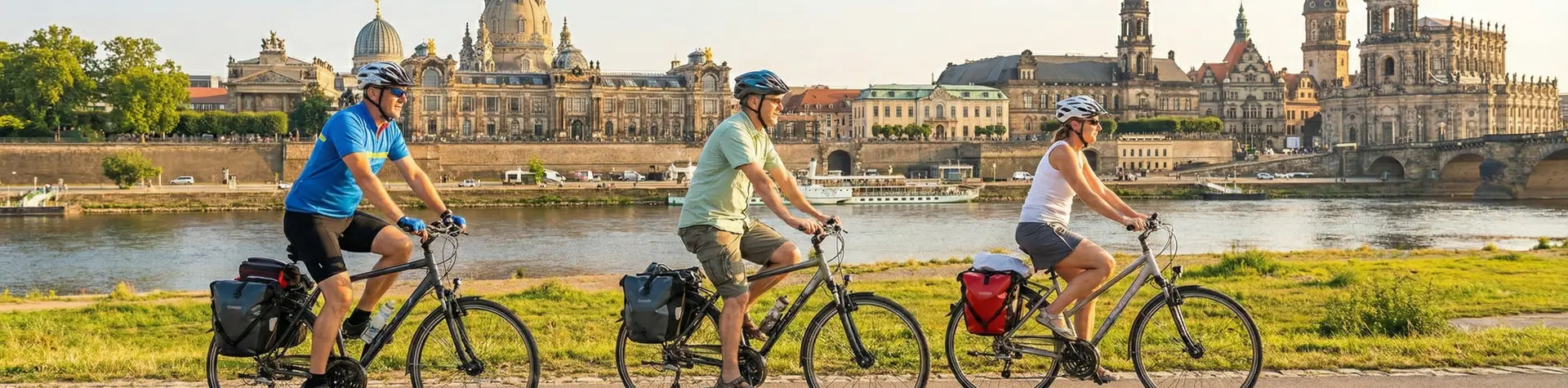
If you've never done a multi-day cycling holiday before, start with a flat route, short daily stages, and luggage transfer. You don't need to be fit, fast, or experienced. The Danube cycle path between Vienna and Budapest — or the Prague to Vienna route — is the gold standard for beginners: mostly flat, well-signposted, and lined with charming towns where you can stop, eat, and recover. Add an e-bike rental and there's almost nothing to stop you.
Who This Guide Is For
This guide is written for:
- First-time cycle tourists who have never done a multi-day trip on a bike
- Recreational cyclists who ride occasionally at home but have no touring experience
- People who haven't cycled in years and are nervous about whether they can manage
- Couples or groups with mixed fitness levels looking for a route everyone can enjoy
If you can ride a bike comfortably for an hour on a flat surface, you can do a beginner bike tour. That's genuinely the baseline.
What Makes a Tour Beginner-Friendly
Not all bike tours are created equal. A beginner-friendly tour has a specific set of characteristics that separate it from an intermediate or challenging route. Here's what to look for:
Flat or Gently Rolling Terrain
Elevation gain is the single biggest factor that separates a manageable tour from a brutal one. Flat river valley routes — like those following the Danube, Elbe, or Rhine — accumulate almost no climbing over a typical day. This matters enormously for beginners because fatigue compounds over multiple days. Even if you feel fine on day one, carrying tired legs into day three on a hilly route is a different matter entirely.
Look for routes with fewer than 300–400m of cumulative elevation gain per day. River cycle paths usually deliver this naturally.
Short Daily Distances: 30–50km Per Day
Experienced tourers often ride 70–100km per day. For beginners, 30–50km is the sweet spot. At a comfortable pace of 12–15km/h, that's 2–3.5 hours of actual cycling, leaving plenty of time for lunch stops, sightseeing, and not arriving at your hotel completely depleted.
Don't underestimate how different 40km on a loaded touring bike feels compared to 40km on your usual weekend ride. The cumulative effect over several days is real.
Luggage Transfer
This is non-negotiable for most beginners. Luggage transfer means your main bags are driven to your next hotel each morning while you ride with only a small daypack. This removes 15–20kg of weight from your bike, makes climbs (what few there are) much easier, and eliminates the need for pannier bags and a heavily loaded touring bike.
Almost every organised beginner tour includes luggage transfer as standard. If you're planning a self-guided trip, look for operators who specifically offer this service.
Hotel-Based Accommodation
Camping on your first bike tour adds logistical complexity — tent, sleeping bag, cooking equipment — that multiplies weight and effort. Stick to hotel or guesthouse-based tours for your first trip. A hot shower, a comfortable bed, and a proper breakfast set you up well for the next day's riding.
Good Signposting
The best beginner routes are well-signposted cycle paths where navigation is simple. EuroVelo routes, particularly EuroVelo 6 along the Danube, are marked consistently across multiple countries. You're unlikely to get seriously lost, and your tour operator will provide GPS tracks or route notes as backup.
Best Routes for Beginners in Central Europe
Danube Cycle Path (EuroVelo 6) — Vienna to Budapest
This is the most popular beginner route in Central Europe, and for good reason. The Danube Valley between Vienna and Budapest is almost entirely flat, exceptionally well-signposted, and passes through some of the most scenic and historically rich countryside in Europe. The route runs for approximately 300km and is typically done in 6–8 days, giving daily averages of 35–50km.
Highlights include the Wachau Valley (a UNESCO World Heritage Site), the medieval town of Krems, the Danube Bend in Hungary, and arrival in Budapest — one of Europe's great cities. The route is almost entirely on dedicated cycle paths or quiet roads, with minimal traffic.
Prague to Vienna
The Prague to Vienna route is slightly longer and more varied than Vienna to Budapest, but remains accessible to beginners, particularly with luggage transfer. It combines city culture at both ends with quiet cycling through South Bohemia, Austria's Waldviertel region, and the Danube Valley. Distances can be adjusted to keep daily stages manageable.
This route suits beginners who want a sense of genuine journey — from one great capital city to another — rather than an out-and-back from a single base.
Elbe Cycle Path — Prague to Hamburg (Shorter Sections)
The full Elbe route from Prague to Hamburg is over 1,200km and not beginner territory in its entirety. However, shorter sections — particularly the stretch through Saxony passing Dresden and Meissen — are flat, well-signed, and ideal for a 5–7 day first tour. The Saxon Switzerland section adds some character without serious climbing.
What Fitness Level Do You Need
The honest answer: less than you think. If you can manage a 1–1.5 hour bike ride on flat ground without feeling completely wrecked, you are fit enough to start a beginner bike tour. Your fitness will improve naturally during the trip — by day three or four, you'll notice you're recovering faster and feeling stronger.
That said, a small amount of preparation helps. In the 4–6 weeks before your trip:
- Ride 2–3 times per week, building to at least one 2-hour ride
- Include one back-to-back day (ride Saturday, ride Sunday) to practice consecutive-day cycling
- If you haven't cycled in a long time, focus on getting your body used to the saddle rather than speed or distance
You don't need to complete training rides of the same distance as your tour stages. Building base fitness and saddle comfort is the goal.
The E-Bike Option for Beginners
E-bikes have changed beginner cycle tourism completely. A pedal-assist e-bike doesn't ride for you — you still pedal — but the electric motor provides assistance that reduces effort by 30–70% depending on the assist level you choose. On a flat river route, you can choose minimal assist and enjoy the ride normally. When you hit a headwind or a rare incline, you bump up the assist and keep moving comfortably.
The practical effect: a 50km stage that might leave a beginner exhausted on a regular bike becomes very manageable on an e-bike. You arrive at your hotel having genuinely cycled, but without the accumulated fatigue that discourages people from continuing.
E-bike rentals are widely available on the major beginner routes in Central Europe, typically at a modest additional daily cost. Most tour operators offer them as an add-on. For beginners over 50, those with any joint concerns, or those who simply want a safety net for the harder days, an e-bike rental is strongly recommended.
What to Expect on Day 1
Day one of a bike tour is usually the most disorienting, regardless of how prepared you are. Here's what typically happens:
- Morning: Collect your bike from the hotel or a nearby rental point. A guide or the rental staff will adjust the saddle height, explain the gears, and hand over your route notes or GPS device. Your luggage is collected by the transfer van.
- First hour: You'll feel slightly stiff, and the bike will feel unfamiliar. This is normal. The pace is slow, the terrain is flat, and you're finding your rhythm.
- Mid-morning: You'll typically stop at a café in a small town. This is the social core of a bike tour — a coffee, a pastry, comparing notes with other cyclists. By this point, most beginners have settled into the ride.
- Afternoon: The remaining kilometres to your destination. Most beginners find the afternoon stage easier than expected once they've warmed into it.
- Arrival: Check in, shower, and realise you've cycled further than you've ever cycled in a single day. That feeling is exactly why people come back.
Practical Tips for Beginner Cyclists
Get Padded Shorts
Padded cycling shorts (bib shorts or regular shorts with a chamois pad) are the single most important piece of kit for a beginner. Saddle soreness is the most common complaint on day two and three of a first bike tour, and quality padded shorts dramatically reduce the problem. Wear them with no underwear underneath — that's how they're designed to work.
Arrive a Day Early
Fly or travel to your start city the day before your tour begins. This gives you time to recover from travel, do a test ride on your rented bike, and start day one rested rather than jet-lagged. Most tour operators offer early arrival accommodation as an add-on.
Don't Overpack
Even with luggage transfer, your main bag has limits — usually 15–20kg maximum. More importantly, you carry a small daypack on the bike with water, a rain jacket, sunscreen, snacks, and a camera. Keep that daypack light. Every kilogram on your back matters over 40km.
Set Your Own Pace
This isn't a race. On a self-guided tour especially, you have the full day to complete your stage. If you want to stop for 45 minutes in a village market, stop. The luggage will be at the hotel when you arrive, however long you take.
Sunscreen and Rain Gear
Carry both every day. A sunny morning on the Danube can become a wet afternoon quickly. A lightweight packable rain jacket takes up almost no space and saves a miserable afternoon. Apply sunscreen at breakfast — you'll forget once you're riding.
Comparison: Beginner Route Options
| Route | Distance | Duration | Terrain | Difficulty |
|---|---|---|---|---|
| Vienna to Budapest (Danube) | ~300km | 6–8 days | Flat | Easy |
| Prague to Vienna | ~400km | 8–10 days | Mostly flat | Easy–Moderate |
| Elbe — Saxon section | ~200km | 5–6 days | Flat | Easy |
Recommended Tours for Beginners
When choosing a beginner tour, look for operators who explicitly include:
- Daily luggage transfer
- Hotel accommodation (not camping)
- Detailed route notes or GPS tracks
- E-bike rental option
- Support contact in case of mechanical issues
The Danube cycle path tours from Vienna to Budapest or Prague to Vienna offered by specialist Central European operators consistently deliver these features. These are not coincidentally the most popular beginner routes in the region — they've earned that reputation through thousands of first-timers completing them successfully.
Your first bike tour will almost certainly not be your last. Most people finish their first trip already planning the next one. Start on a forgiving route, keep the distances honest, and let the route do the work of convincing you.